By Cory Sekine-Pettite
As this publication conveyed in our May/June 2026 issue, Cobb Community Foundation (CCF) reported a record year in 2025 with charitable assets of $39 million and $6.5 million awarded in grants and scholarships for that year alone. At the time, CCF President and CEO, Shari Martin, told Cobb In Focus: “At Cobb Community Foundation, we simply have the privilege of connecting the dots — mobilizing people, ideas, and resources so generosity can go further.”
Frankly, that’s a modest assessment of the impact generated by CCF and its fundholders, donors, and other numerous stakeholders, so this publication dug a little deeper into the organization to bring readers a better understanding of CCF’s larger purpose and its continuing evolution in maintaining its commitment to “Activate Good.” To that end, Martin agreed to answer a series of questions for us. The key takeaways are that generosity, kindness, philanthropy, optimism, and purity of spirit are thriving in Cobb — and Cobb Community Foundation reflects it all.
Cobb In Focus (CIF): Give us an overview of where CCF is today, and how you see the organization evolving over the next several years.
Shari Martin: Cobb Community Foundation now stewards over $40 million in charitable assets. Last year, we distributed about $6.5 million to charitable causes, the vast majority of it coming from individual and corporate donor advised funds and scholarship funds. We’re particularly proud that even though these fundholders can grant to any 501(c)(3) charitable organization anywhere, in 2025, they kept 73 percent of their grantmaking right here in Cobb.
Managing charitable funds and making grants is how we got started. What has changed, though, is the impact those dollars are making right here in Cobb County. Years ago, it wasn’t unusual for two-thirds of our grantmaking dollars to go outside of Cobb. Now, nearly three-fourths stay inside of Cobb.
Why is that? We’ve not just gotten bigger, we’ve gotten better.
Many people don’t realize that when they choose CCF to manage their charitable assets, they are doing more than establishing a charitable fund. The fees they pay help fund the work we do throughout the community. That growth has allowed us to build a team with expertise in charitable giving, nonprofit effectiveness, community engagement, and research. As a result, we’re better at identifying needs, understanding what’s standing in the way of progress, and helping connect people and resources to solutions. That, in turn, has helped more people discover opportunities to make a difference right here in Cobb County.
Over the next several years, I see CCF becoming an increasingly important community resource — not because we will be doing more ourselves, but because we will help more people work together more effectively. Our future is not about becoming bigger. It’s about helping our community become stronger.
This is what we mean when we talk about “mobilizing people, ideas, and resources.” We bring together the relationships, knowledge, charitable resources, and community leadership needed to help our community address challenges and seize opportunities.
CIF: So, CCF’s strategic plan is to become a “Community Catalyst.” Please describe what this term means and how it differs from your previous operational perspective.
Martin: To me, a Community Catalyst is an organization that helps good things happen by bringing together what’s needed to move ideas into action. It doesn’t mean we’re the ones coming up with all the ideas or doing all the work. It means we’re helping create the conditions for good work to happen.
We’re always going to manage charitable funds and make grants. But as a community foundation, we are positioned to be able to do so much more. Whether we’re talking about economic mobility, mental health, childcare, workforce development or other issues affecting quality of life, moving the needle requires more than just money.
I go back to our mission statement; it means mobilizing people, ideas, and resources. It’s about bringing together the right people, organizations, knowledge, and lived experiences, so that real solutions can emerge. It means serving as a trusted community partner that helps others succeed while building the relationships, trust, and infrastructure that allow communities to solve problems together.
Early in my tenure, much of our focus was on growing charitable assets. That’s still important because those assets allow us to do our work. But over time, we’ve become much more focused on the purpose behind that growth. The funds we manage, the grants we make — those are tools. But the ultimate goal is a thriving community where everyone can access opportunities and reach their potential.
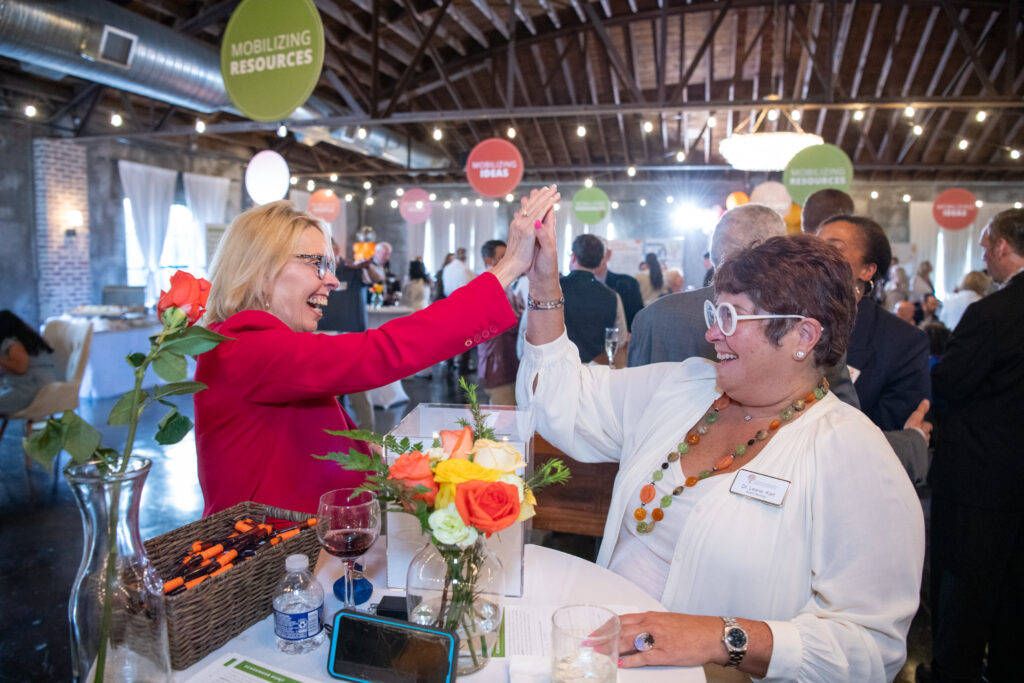
CIF: You have said that you want CCF to evolve more into an organization that helps to strengthen the quality of life in Cobb County and beyond. How does your new strategic plan fit into this goal?
Martin: Our strategic plan is built entirely around that goal. Quality of life is influenced by many factors, none of which exist in isolation.
We know, for example, that a child’s future opportunities are influenced by far more than what happens in the classroom. Housing, transportation, childcare, mental health, financial stability, and community support systems all matter. If we want to improve quality of life and expand opportunity, we have to understand how those pieces fit together and work across sectors to address them.
Our role is not to become experts in every issue. Our role is to help the people who are working on those issues be more effective. That’s why our strategic plan focuses on four key areas: our own organizational effectiveness (we have to put on our own oxygen mask before we can help others), expanded nonprofit capacity, community problem solving, and collective giving.
If we can help the community better understand where needs exist, connect generous people and businesses with opportunities to make a difference, and help organizations work together more effectively, we can create lasting change that improves quality of life for everyone who calls Cobb home. Every member of CCF’s board plays a vital role in creating change. For the complete list, visit http://bit.ly/3SnebmP.
CIF: In what ways do you plan to build out CCF’s legacy, and how will this assist your community partners in continuing to build their legacies?
Martin: When people hear the word legacy, they typically think about what happens after they’re gone. We take a cue from one of our fundholders, Bernie Brown. Bernie doesn’t want just to leave a legacy; he wants to live his legacy.
It’s the same thing with CCF. Every day, we’re helping shape our legacy. To us, legacy isn’t primarily about what happens after you’re gone. It’s about the values you choose to put into action today.
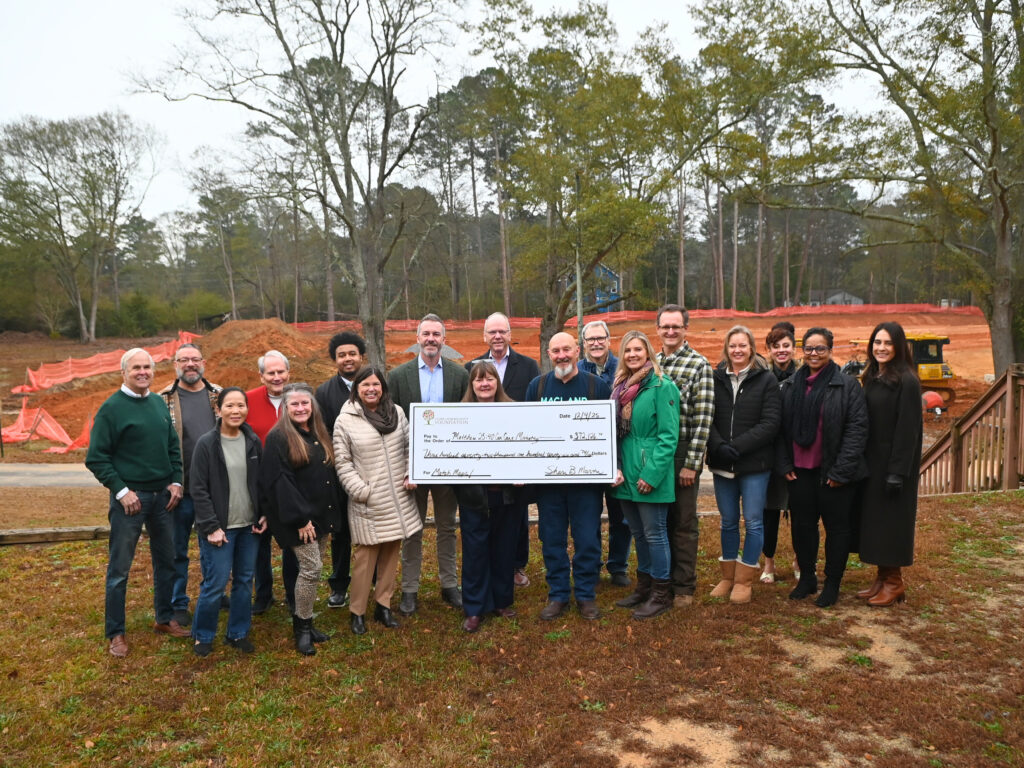
Every time we help a nonprofit overcome a barrier, we’re building our legacy. When we help Matthew 25:40 Car Care Ministry raise funds and navigate challenges so it can serve more families, that becomes part of our legacy. When we help bring proven models like Circles Cobb to our community so families can move from merely getting by to getting ahead, that becomes part of our legacy.
We help individuals and companies create their own legacies as well. You can’t attend a gala in Cobb County without seeing Cumberland Diamond Exchange’s generous donations for auctions or raffles. Owners Mark and Rhonda Jacobson want to ensure that the name “Cumberland Diamond” will always be associated with community. Accordingly, they created the Cumberland Diamond Exchange Community Legacy Fund. This charitable fund supports our community today, and it will continue to do so long after Mark and Rhonda are gone.
One of the most rewarding parts of our work is helping individuals and families translate their generosity into something enduring. We ask them: “What do you want your money to do?” This is much different than “Who do you want to receive your money?” because the person or organization you first think of may not be the one best equipped to accomplish what you want accomplished.
The same is true for nonprofits, businesses, and community leaders. Strong organizations create lasting change, and we want to help ensure they have the relationships, resources, and support they need to thrive for years to come. Ultimately, legacy isn’t about any one organization, donor, or gift. It’s about creating the kind of community we want future generations to inherit.
CIF: How do you determine what Cobb County needs in terms of assistance and support?
Martin: One of the lessons we’ve learned is that no single person or organization has a complete picture of community needs. We need data. We need raw numbers. But we also need to hear from people, and we need to ask the right questions in the right way.
Different groups see different parts of the picture. Nonprofits see service gaps. Government sees trends. Businesses see workforce challenges. Residents experience barriers firsthand. Many of the issues affecting quality of life — from economic mobility to childcare to mental health — are interconnected. If we rely on only one perspective, we risk missing what really matters.
That’s one of the reasons we launched Vital Signs, a long-term initiative in partnership with KSU and Neighborhood Nexus designed to combine data, community voice, and local expertise to better understand the factors affecting quality of life in Cobb County. Before we ever started collecting information, we asked nonprofits, government agencies, and community leaders what they needed to know, who we should be talking to, and what questions we should be asking. The people experiencing challenges often have the clearest understanding of what is and isn’t working, so their voices are especially important.
Our goal is not to tell the community what its priorities should be. Our goal is to help the community develop a shared understanding of those priorities so we can work together more effectively. When people are working from the same information and understanding, it becomes much easier to align resources, coordinate efforts, and ultimately improve quality of life.
CIF: Can you share stories from your partners that have changed lives?
Martin: One example is Circles Cobb. We typically don’t help start new nonprofits, but we saw a gap in services that we and others believed needed to be filled. We also had a roadmap to follow.
Circles USA is a 25-year-old organization with chapters across the country and a proven track record of helping families who are stable but stuck achieve economic mobility. Participants (called “Circle Leaders”) work alongside volunteer “Allies” who provide encouragement, accountability, and support as families pursue their goals. Our first Circles Cobb cohort increased its average income by 93 percent.
What began as a program to help individual families improve financial stability has evolved into a broader community effort focused on understanding and addressing barriers to economic opportunity, and it’s been amazing to watch.
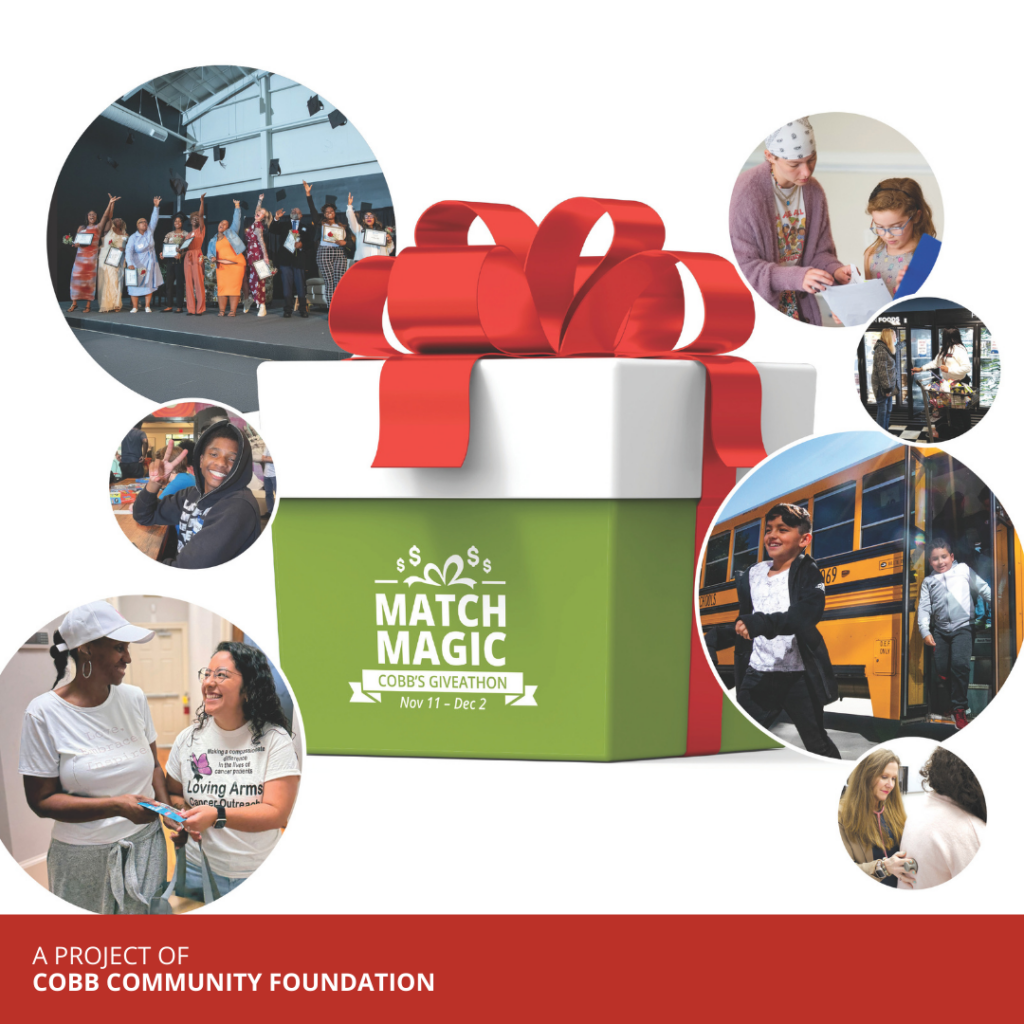
Another example is our Match Magic initiative. It started as a way to help nonprofits raise more money during the holiday season. What we discovered was that the real impact extended beyond fundraising. Participating organizations received marketing support, storytelling training, templates, and communications calendars — tools they could use all year long. In just three weeks, we helped 27 organizations raise more than $1.7 million, increase their visibility, gain new donors, and receive larger gifts from existing supporters.
What’s been just as amazing is watching the community response. We had more than 1,000 unique donors participate. The nonprofits followed our lead and went big on social media, encouraging their board members and followers to do the same. And they did.
Perhaps the most dramatic example happened during COVID. As supply chains broke down, farmers were struggling, food distributors were hurting, and families throughout our community needed help. At the same time, the Atlanta Braves found themselves with an available loading dock, a recently emptied stadium refrigerator, and a delayed baseball season. We worked with the Braves, Delaware North, USDA food distributors, nonprofit organizations, churches, and community partners to turn Truist Park and a few other locations into temporary food distribution hubs for Cobb County.
What emerged became the Cobb Community Food Fleet. Over 15 months, more than 60 nonprofits and churches worked together to distribute over 4.4 million pounds of food. We didn’t distribute the food ourselves. We helped bring together the organizations, resources, and logistics needed to make it happen.
What I’m most proud of isn’t the food distribution itself. It’s the collaboration that resulted. Organizations that had never worked together before began sharing resources, coordinating efforts, and solving problems together. While that program ended in 2021, the relationships remain.
What all three examples have in common is that they started as efforts to address a specific need. But when the right people, organizations, and resources came together, they became something much larger.
That’s one of the things I’ve learned over the years: Sometimes the greatest impact isn’t the program itself — it’s the relationships, partnerships, and momentum that continue long after the original need has been met.
CIF: How can the rest of us get involved with CCF?
Martin: That’s easy. Let’s have a conversation.
Let us get to know you. Let us learn what’s important to you. When you look around our community, is there something that particularly excites you? Alternatively, is there anything you see that breaks your heart?
Sometimes, people discover a passion they never knew they had simply because they were exposed to a story, an organization, or an opportunity they didn’t know existed. That’s where we come in. My advice is not to wait until “someday.” Opportunities to make a difference are all around us, but we often miss them because no one has connected us to them.
You don’t need to be wealthy, and you certainly don’t need to have all the answers. If you’re interested in volunteering, we can help connect you with organizations doing important work in areas you care about. If you’re interested in charitable giving, we can help you explore opportunities that align with your interests and values. If you’re a business owner, we can help you think about how your company can make a difference in the community. And if you’re simply curious about what’s happening in Cobb County, we’d love to share what we’re learning.
At the end of the day, meaningful change starts with people who care enough to get involved. Our job is helping them find the place where their passions, talents, and resources can make the greatest difference.
Sometimes the most important thing we do isn’t help someone make a gift; it’s helping them discover the difference they want to make.
CIF: Is there anything else you would like to share with our readers?
Martin: Cobb County is an amazing community. Every day, we meet people who are giving their time, talent, and resources to help others. We meet nonprofits doing remarkable work. We meet businesses that care deeply about the communities they serve.
The challenges we face are real, but so are the opportunities. That’s what excites me most about the future — not what Cobb Community Foundation can do, but what we can all do together. We’ve seen time and again what happens when generous people, strong nonprofits, engaged businesses, and community leaders come together around a common purpose. Incredible things happen.
That’s why I’m so optimistic about Cobb County. We have the people, the generosity and the willingness to work together. When those things align, there’s no limit to what our community can achieve.
Editor’s note: Some responses were edited for style, clarity, or brevity.